J is for Jubilee Arch#
Thu 03 Oct 2024 08:47:09 PM UTC
Well, I'd like to say that J is for Jubilee Arch: specifically this feature on OSM in Stansted Mountfitchet which I decided to go and see in person because it's not mentioned on Google Maps/Streetview, nor on Wikipedia, nor in any internet search result with any relevant search terms I could think of.
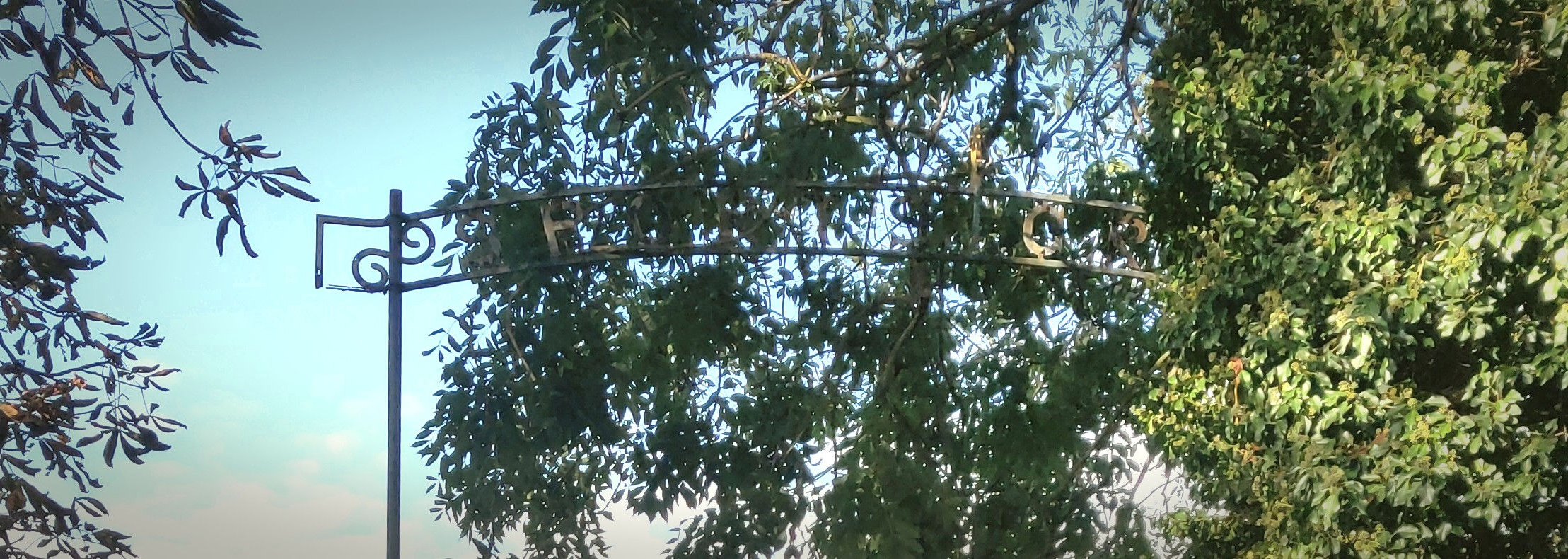
I did at least find an arch. It's wrought iron and stands over the entranceway to the Stansted FC grounds. I got a Iousy photo which after cropping, playing with colour, and mirroring left/right looks like this: you can probably convince yourself that the word on the left says "sport" but there's so much foliage it's hard to tell.
So when I got home I had another go at Streetview, and by going back in time to an image taken in November I was this time able to find the thing.
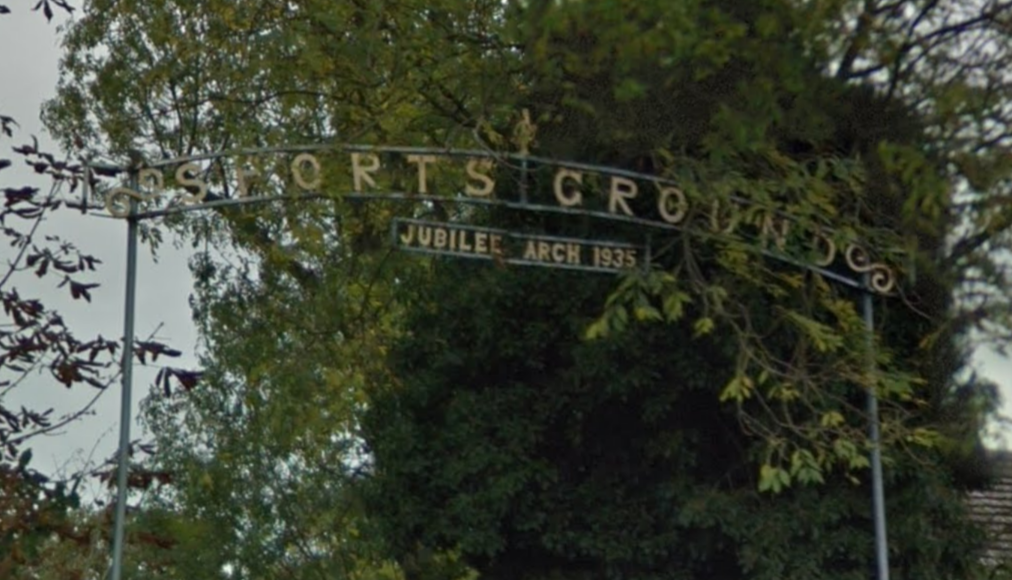
It looks like the bit that says "Jubilee Arch 1935" has been removed/stolen/fallen off between 2016 and 2021
On the way there, I also saw a couple of jet aeroplanes low in the sky - it's very close to Stansted Airport
On the way back I saw a L-plated Just Eat delivery rider on a scooter on the M11.
So I think this covers J adequately. Finding a destination for J has been an absolute mare, so I am happy to have got past this. I don't have a K yet but surely it will be easier.
Motorway riding is still just as dull and noisy as I remember it from last time though the mild terror seems to have diminished.
Log off#
Sun 06 Oct 2024 07:30:28 PM UTC
I missed doing a blog update in September, but I did make a
video
demonstrating using an external source for secrets management.
With a new better microphone, too, so the audio is less awful.
But now it's October, and this update is all about getting logs
off
your device(s) and into some other system where you could index them
or search them or do alerts or whatever else based on them. There were
a few things I had in mind as goals for this work
-
it shouldn't rely on a particular downstream service - so it's not
coupled to Graylog or ELK or Prometheus or even rsyslog
-
I'm not going to rewrite all the applications that Liminix devices
use to make them produce "structured" logs: as Avery Pennarun said: “the debate about "events" vs
"logs" was kind of moot. We didn't control all the parts in our
system, so telling us to forget logs and use only structured events
doesn't help. udhcpd produces messages the way it wants to produce
messages, and that's life. Sometimes the kernel panics and prints
whatever it wants to print, and that's life. Move on.”
-
for the purposes of interactive diagnostics, I want to see the logs
arrive on the log collator machine in more-or-less realtime instead of
waiting for 60 seconds or 4MB or something
-
if the log collator service is unreachable, everything else should
carry on working - i.e. the device will continue to write to /run/log/current
(Side note: yes, I've changed the log location from /run/uncaught-logs
to /run/log)
So how does it work? There are two parts:
If you set logging.shipping.enable = true, we
insert a call
to
logtap
in the pipeline that runs the default logger. This is a small program
(with, I now notice, really weird indentation?) which copies its
input to its output and also to a unix socket but only if there's
something listening on that socket.
Then if you set logging.shipping.service to a longrun of some kind,
that service is run with its standard input connected to the said
socket, and can do anything it likes to get the logs it's receiving
off the box and sent somewhere else.
So here's the example I'm working on:
  logging.shipping = {
    enable = true;
    service = longrun {
      name = "ship-logs";
      dependencies = [ config.services.client-cert ];
      run =
        let path = lib.makeBinPath (with pkgs; [ s6-networking s6 ]);
        in ''
          PATH=${path}:$PATH \
          CAFILE=${/var/lib/certifix/certs/ca.crt} \
          KEYFILE=$(output_path ${services.client-cert} key) \
          CERTFILE=$(output_path ${services.client-cert} cert) \
          s6-tlsclient -k loghost.example.net -h -y loghost.example.net 19612 \
          fdmove -c 1 7 cat
        '';
    };
  };
This connects to a service on loghost which accepts TLS connections
and pipes them to s6-log which spits them out to /var/log/remote
  systemd.services."s6-log-collector" = {
    after = [ "network.target" ];
    wantedBy = [ "multi-user.target" ];
    serviceConfig = {
      Type = "exec";
      WorkingDirectory = "/var/log";
      ExecStart = (pkgs.writeScript "start" ''
        #!${pkgs.runtimeShell}
        ${pkgs.socat}/bin/socat openssl-listen:19612,reuseaddr,fork,cert=/var/lib/certifix/certs/server.crt,key=/var/lib/certifix/private/server.key,cafile=/var/lib/certifix/certs/ca.crt  stdout | ${pkgs.s6}/bin/s6-log -b /var/log/remote
      '');
    };
  };
Tada!
Oh, one more thing: what's this "Certifix"? I said there were two
parts? I'd better explain the third part. The issue is I want to
accept logs from my devices but i don't to accept logs from the entire
internet, and as I trust zero I wish to accomplish this using some kind of
authentication rather than by using firewall rules.
Certifix is a small network
service which accepts ~~SSL~~ TLS certificate requests (CSR) and
generates signed certificates, but only if the CSR contains a magic
word (which is baked into the Liminix image), and not if it doesn't.
Here's the bit where I call it on the device:
  services.client-cert = svc.tls-certificate.certifix-client.build {
    caCertificate = builtins.readFile /var/lib/certifix/certs/ca.crt;
    subject = "C=GB,ST=London,O=Telent,OU=devices,CN=${config.hostname}";
    secret = builtins.readFile ../challengePassword;
    serviceUrl = "https://loghost.example.net:19613/sign";
  };
and now I have a private key (which is generated on the device itself,
btw) and a certificate for the device, which it can use to
authenticate to any service elsewhere that can check it against the CA
cert.
How done is this?
Not entirely, but it's getting there
- it works in my Qemu VM, but
- I haven't installed on any real device yet, and
- it doesn't deal with kernel messages,
- nor does it "backfill" messages to the remote service that were produced before the shipper started
And you should read the Avery Pennarun article if you haven't seen it before.
K is for Kiln#
Sat 19 Oct 2024 10:59:46 PM UTC
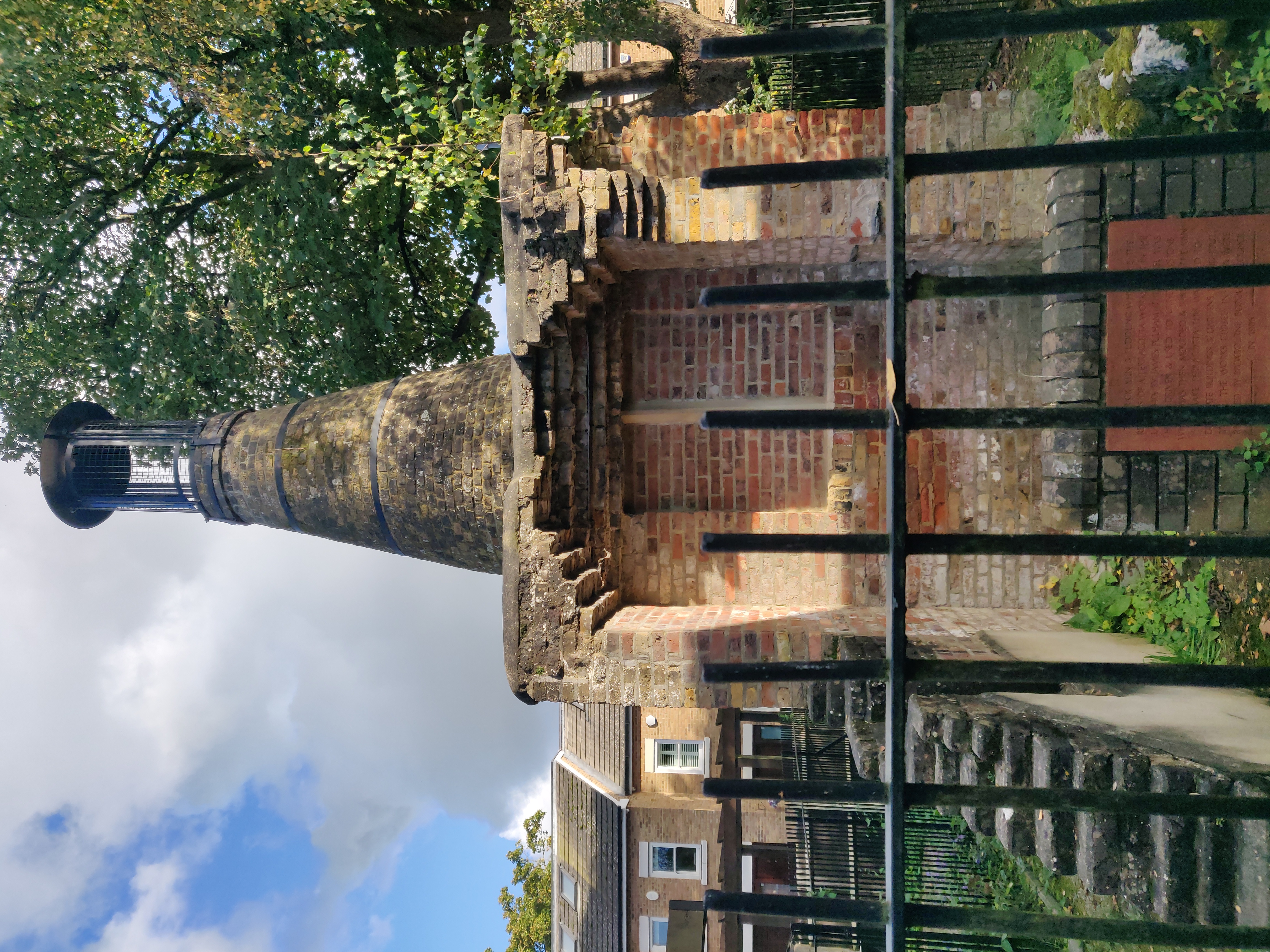
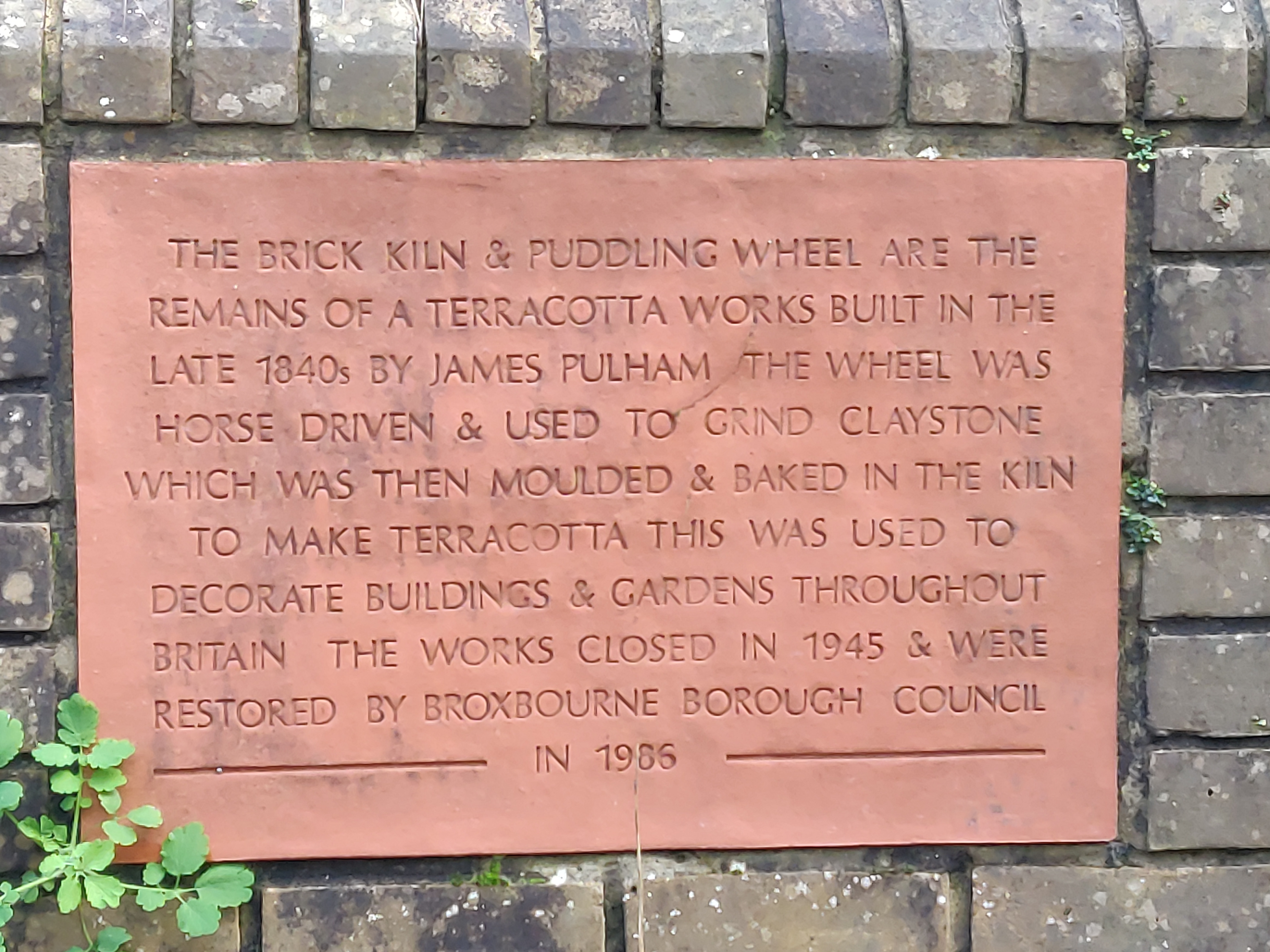
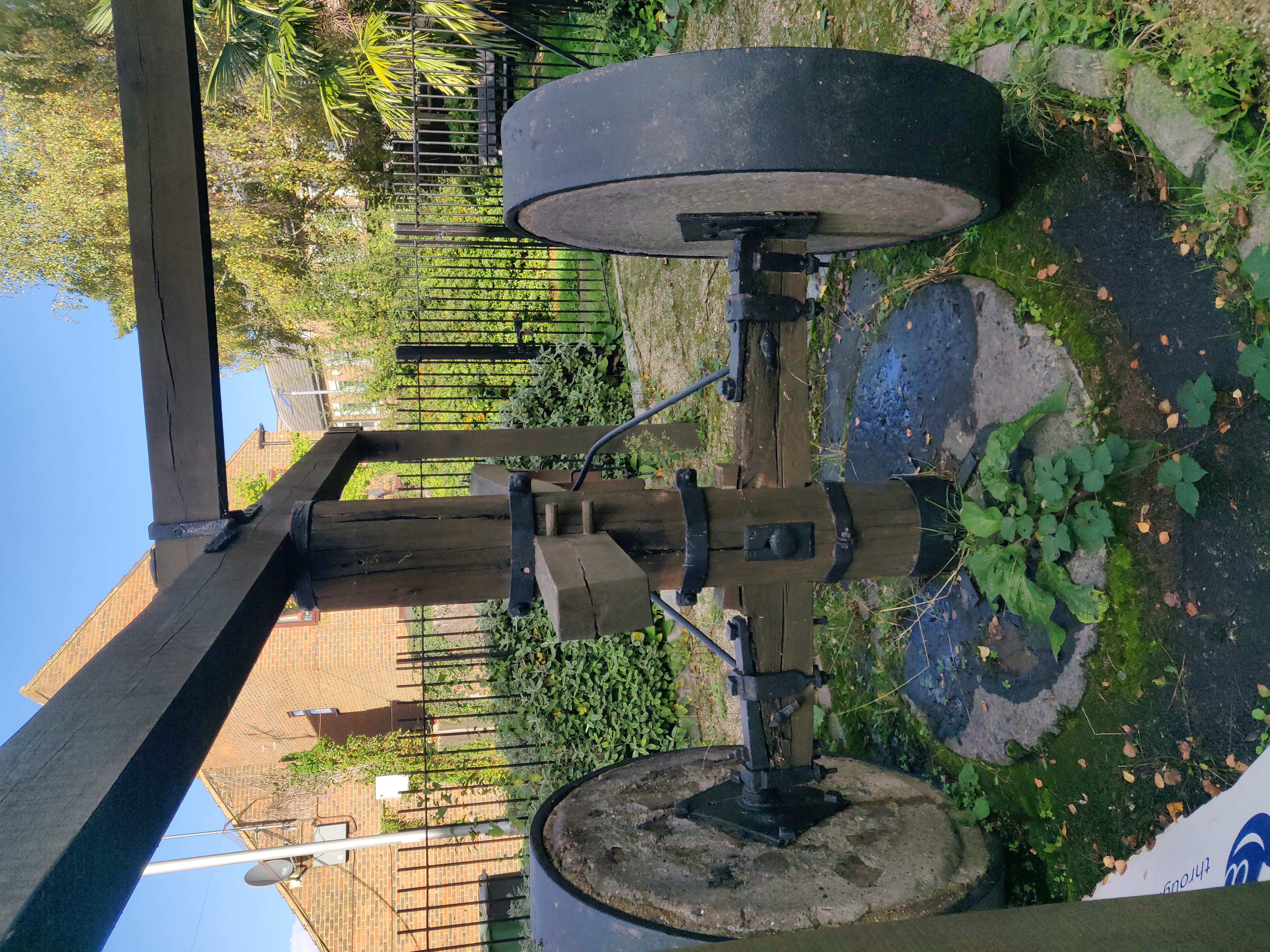 K is for Kiln: this is a brick kiln that once formed part of the "Pulham Manufactory", a terracotta works. Most of it was demolished to build a car park for the railway station nearby, but this one remaining kiln was preserved and restored
 From here to Broxbourne is some quite dull 30mph riding then a wiggly 50mph section which was good fun.
On the way back it was not so much fun because low sun shining straight at me, and although I had sunglasses on, still sometimes hard to see where I was going.