This week in Liminix: also, last week and for several weeks preceding,
it has been all about the "device database".
To recap, we wish to run certain services only under particular
conditions. The particular use case I have here is my backup
server
which is a GL.iNet travel router that runs rysncd, with a USB disk
plugged into it. (There's historical resonance here: a lightweight
backup server was the original reason I started writing NixWRT). The
system shouldn't try to mount the external drive unless it's
plugged in - if it starts the mount service at boot, the service
startup will hang, and that means the machine can't be cleanly rebooted -
or any other change made to the running services - until the disk is
attached. Ugly.
The disk is present when there's a node in sysfs with a uevent file
containing the attributes DEVTYPE=partition and
PARTNAME=backup-disk.
but we don't know where under /sys the file is: the kernel allocates
sdX devices as it sees them, so it might depend on how many other
storage devices are plugged in.
The naive solution (don't do this) would be to recursively walk the
whole of /sys every few seconds. Thankfully we don't have to,
because the kernel sends "uevent" netlink messages whenever anyhing
changes. So we built "devout", a service that maintains a model of
all the hardware by listening to these messages
and updating a database
(using the term in its loosest sense) of the state. Then we can have
a client
(or many clients) connect to the database service and say "send me all
the events matching some critiera I am interested in". Devout will send it
the messages for all matching devices it knows about at connection
time, then relay further relevant netlink messages to it until it
disconnects again.
The client then starts its controlled service when it gets "add" or
"change" events and stops it again on "remove".
"Why go to all this trouble when udev already exists?" It's a fair
question, and I keep asking it myself as well.
The short version is that udev rules afford a level of generality
which is (so far, for our purposes) unnecessary, and easy to get
wrong, and hard (for me, at least) to reason about, because it allows
arbitrary commands on each event and it doesn't have symmetry - it's
hard to be confident that all the changes to the system which were
introduced by some "add" rule are undone correctly when the device is
removed. The udev rule language has jumps and conditions which means
it's not simple to know what a rule will do when considered in
isolation.
Another consideration is that I am hoping this general pattern - a trigger service
wich subscribes to events from another service - will be applicable
for other event sources - e.g. SNMP, or rtnetlink messages, or
collectd, or (fill in your appplication here).
Levitate me
Where we are right now, though, is that I have reinstalled my backup
server, and this time I have enabled it for
levitate: the mechanism for rebooting into a maintenance system that I
implemented last year. And promptly discovered that
for it to to be any actual use, it needed some rejiggering: the tl;dr
is that levitate now expects to be passed a whole config fragment
not just a list of services. So maybe now you can use levitate (and maybe I should write some documentation for it)
Failover is the mother of success
Next thing on the list is a mechanism for failover to a secondary WAN
connection when the primary link goes down.
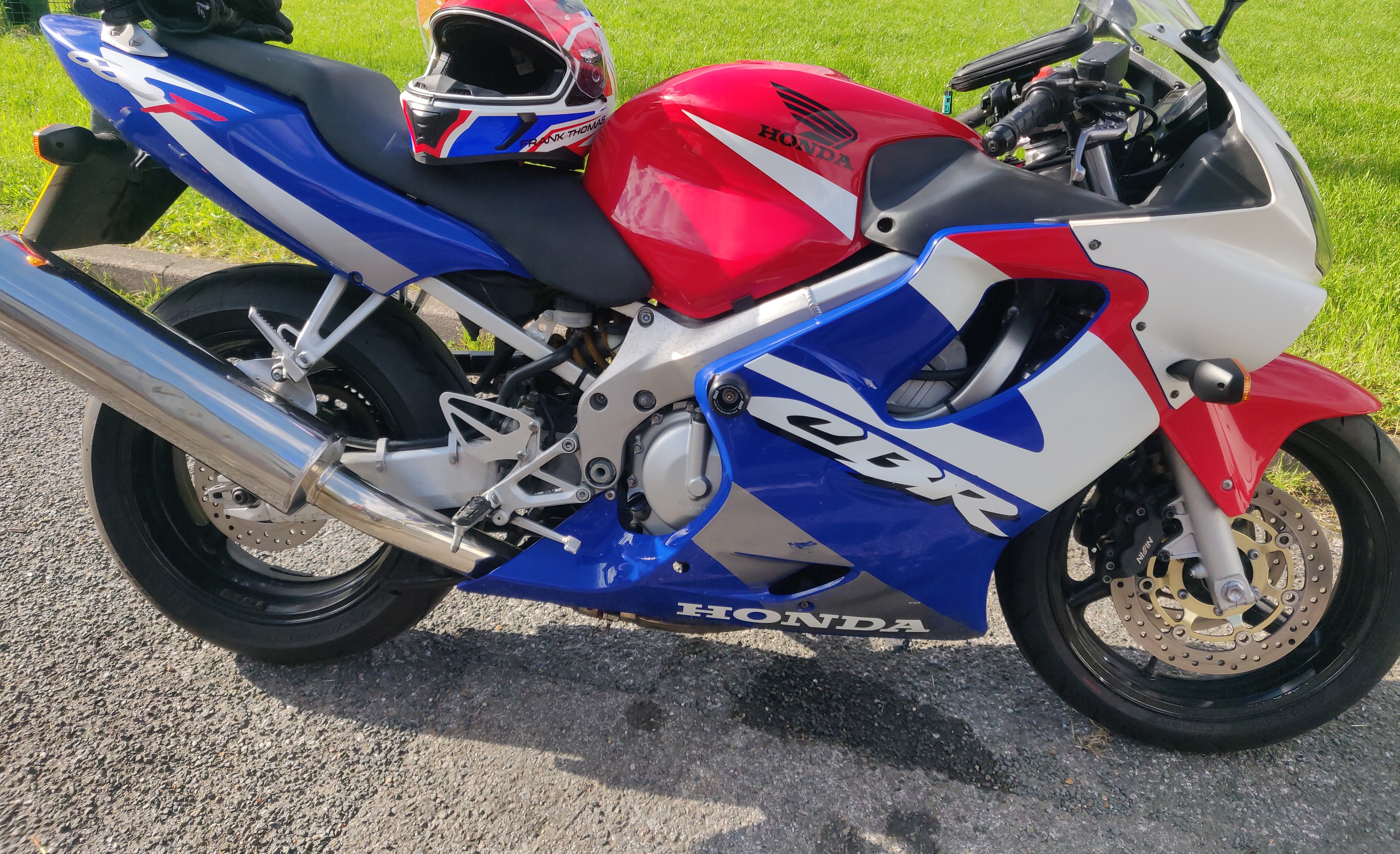
I bought a motorbike. This was a slightly more drawn-out process than I expected it to be, but the upshot was that I bought a motorbike with a working speed sensor, which might not have been the case if they hadn't serviced it before letting me collect it.
Anyway. Collected it on Saturday. Sat on bike, started it. stalled it, started it again, rode three times round the block by the dealership hitting the horn button every time I went for the turn signals, and then forgetting to cancel the turn signals afterwards, then took off towards the A40 and the A406. Mostly 40/50 limits, lots of stop and go, but more stop than go. I mostly chose to use that as an opportunity to get a feel for the clutch rather than filtering: will upgrade to filtering when I've had a bit more time on the bike. Haven't been past 5000 revs yet.
Very grateful for the Mod 1 manual handling training but I do wish it had included how to go up kerbs, because getting the bike from the street into the back garden was hard work. The turning circle when pushing is ... not great.
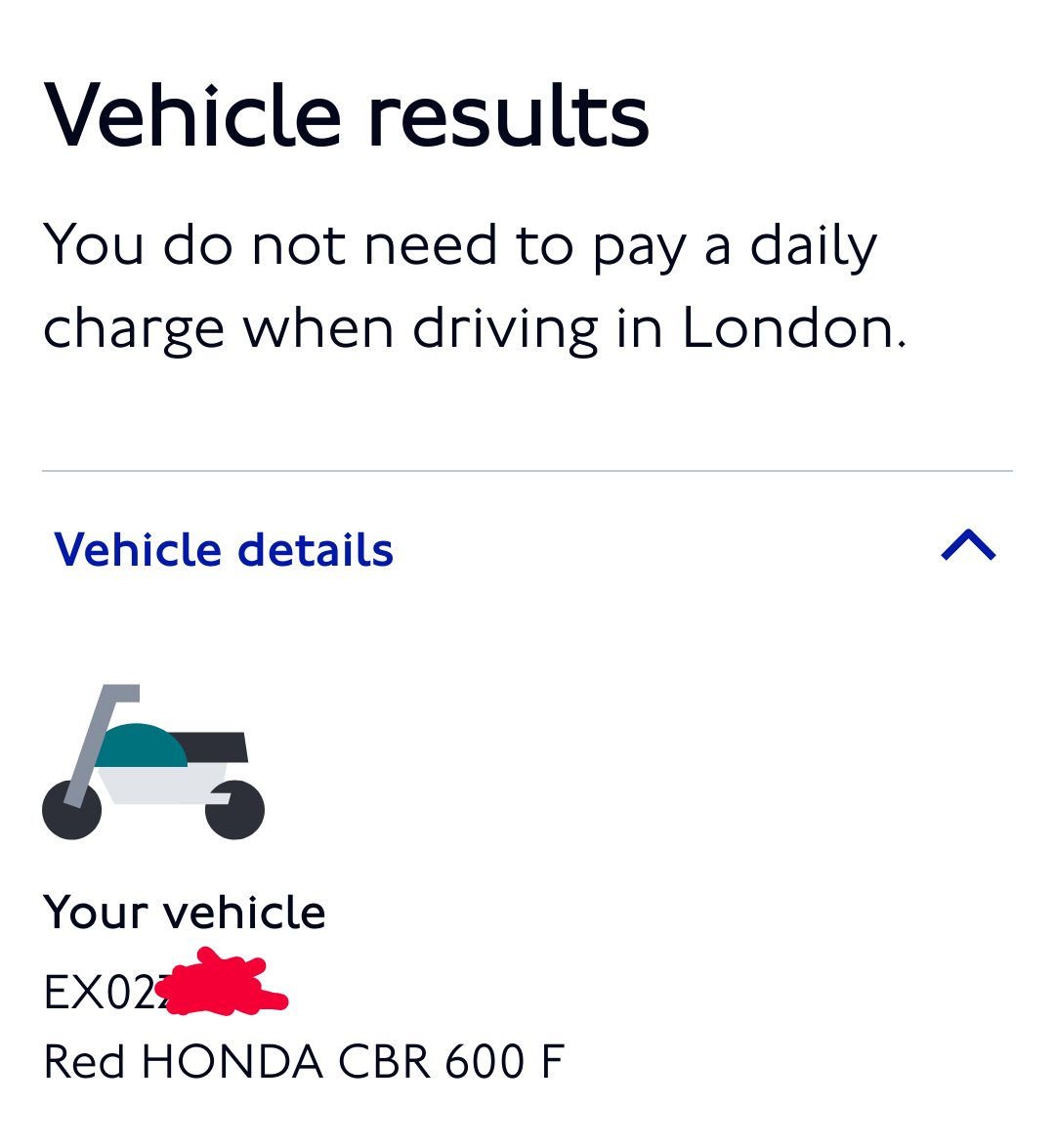
I have the CoC from Honda but it looks like I'll have to wait for the V5 to be sent to me (I only have the new keeper slip) before I can do ULEZ registration.
Yesterday I went out for my first ride not counting riding home from
the dealership.
tl;dr didn't drop it didn't crash, so it met the basic success criteria. But not an unalloyed pleasure.
For the longer-form report ... the plan was to go to a garden centre about 20 miles from home and
buy a coffee to sit in the sunshine with. I perhaps foolishly decided
to try navigation using
Kurviger. Foolish (1) because
Kurviger's idea of a "curvy" route in London turns out to be a route
that eschews all major thoroughfares in favour of 20mph residential
roads, and foolish (2) because Kurviger "Follow mode" is not terribly
(at all) clear on a smartphone screen when the sun's shining directly
on it.
I spent 20-30 minutes riding around Chingford and South Woodford
before deciding I was lost enough to stop and look at the map
properly, and when I did, I appeared to be on a long straight road
that would have passed under the A406 (London's "North Circular Road")
and rejoined the route. So I set off again Unfortunately, when I
reached the A406 it turned out to be not a bridge but an
on-ramp. Downside: I was now pointing in the wrong direction; upside:
I knew exactly where I was and it was about 5 minutes from home. So I
went home and had a coffee in the sunshine there instead.
Lessons learned: get some miles from home before engaging wiggle mode.
Result, indeed. My fuel-injected CBR600F (2001 and later years) meets the ULEZ standard for Euro 3 NOx emissions despite not being officially a Euro 3 vehicle, but you have to do some paperwork to get it registered as such.
Get the Certificate of Conformity from Honda. This is free if no previous owner has applied for it already: in my case it was sent by DHL from Bosch in Seville, causing much puzzlement when I got the SMS notification of a package. "Don't remember ordering anything from Bosch, what can that be?". Took about four or five days https://www.honda.co.uk/motorcycles/owners/documentation/certificate-of-conformity.html
The TfL process is all done on the internet https://tfl.gov.uk/modes/driving/compliance-registration/before-you-start and requires scans of the CoC and the V5C. I attempted on the day I collected the bike (Saturday of May Bank Holiday weekend), not yet having the V5C, to register using the new keeper slip, the CoC and a copy of the purchase receipt ...
and had a response from them by email on the next working day (Tuesday) saying they needed the full four page V5C. My subsequent attempt to persuade them otherwise (I was polite) was unsuccessful.
Today the V5C arrived in the post, so I scanned it, attached it to the email thread and sent it to them, and had a reply before the end of the day saying my application was successful.
Overall the process was pretty painless, faster than I'd feared it might be, and cheaper than taking the bike to one of the approved testing stations. I'm out £25 for the two days I rode in the ULEZ zone while paperwork was pending (can't claim that back) but that was the only cost involved.
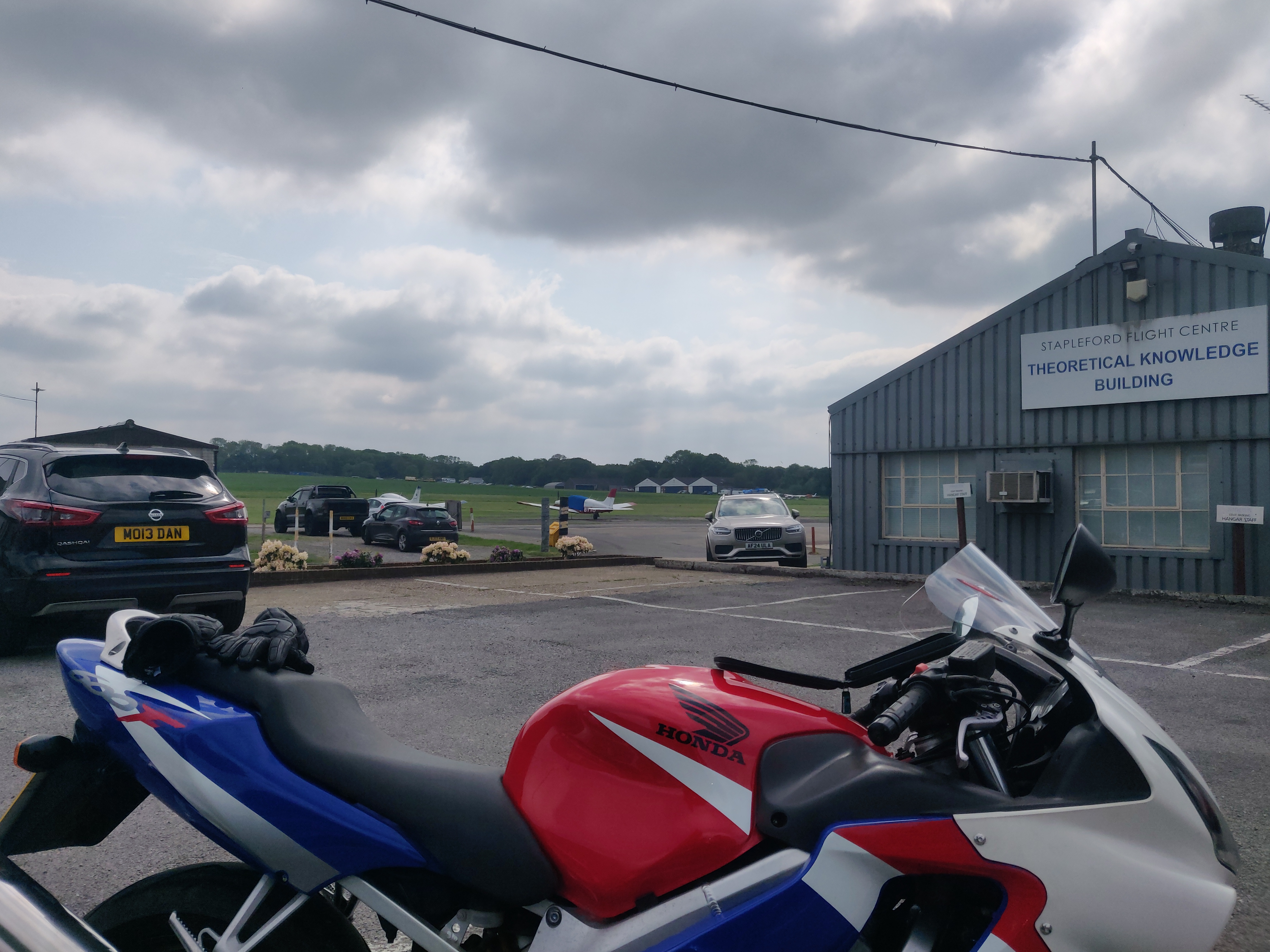
A is for Aeroplane. The plan for this ride was to go to Stapleford Airfield and then on to Finchingfield. The ride as performed went to the airfield (as you can see) and then roughly northwards until the petrol light came on, then back the way we came then ... then I confused myself with the gps due to setting it for Abridge when I thought I'd set it for home. Went to Abridge twice, took in Chigwell (although no part of it that I recognized), then I saw a sign for Buckhurst Hill and it was more or less plain sailing after that. Phone battery died at some point between Buckhurst hill and home, so probably a good job I didn't need it by then.
I've done something to the wiring at the back while wiring the dashcams, resulting in the right indicator flashing at double speed. So that's a bit annoying but hopefully its just a loose ground.
Haven't actually looked yet to see if anything was recorded
The camera is made by "Vsysto" which sounds like the typical Amazon made-up name ("WISZUA") but has reviews from some reputable web site so I thought I'd take a punt on it (half the price of an Innov). By means of ejecting the microsd card and sticking it in a computer, I can verify that it did successfully record, that the rear camera was mounted upside down, and the footage is just as boring as you'd expect dashcam footage to be.
The front camera footage has a weird ripple effect, but i think that's because it's stuck to a piece of plastic that wobbles when the bike is moving. There aren't many options for mounting a camera on the front of a faired bike that aren't fairing
B is for Bunker, but sadly there are no photos as I was unable to actually find it. Rode out to Nazeing via some twisty turny up and downy NSL roads, which was fun at times and slightly scary (gravel) at one point, and also slower than necessary at other times due to cars travelling 35 in a 50. Though perhaps if it hadn't been a 50 I'd have spent more time looking for the bunker I was there to find.
Nazeing' was a World War II airfield decoy controlled by RAF North Weald some four miles to the east. The decoy was both a daytime K' site and a night-time Q' site. K' sites included grassed runways, defence positions and plywood aircraft amongst their simulations; Nazeing was equipped with dummy Hurricanes. `Q' site deceptions included runway lighting, obstruction/recognition lights and moving headlamps.
You can turn a bike by steering it (turning the front wheel by moving
the bars), or by leaning it, or by a combination of the two.
Steering is like in a car: the wheel is pointing at an angle to the
direction of travel. The tyre sticks to the road a bit instead of
sliding smoothly over it, so the wheel is exerting a force on the rest
of the vehicle. This force is acting partly against the direction of
travel (providing a "drag" force) and partly at right-angles to the
direction of travel (providing a "slip" force). Per Newton, the
sideways slip force changes the vehicle's direction of travel to make
it go round the corner. On a bike, trying to turn using steering alone
will result in falling over. Suppose you're turning left, the bottom
of the wheel is being going left slightly, but the bike has mass - and
therefore inertia - so this will cause it to rotate rightwards. Once
the centre of gravity is no longer over the tyre contact patch, it
will topple. The faster you're moving, or the sharper you turn, the
greater the sideways force.
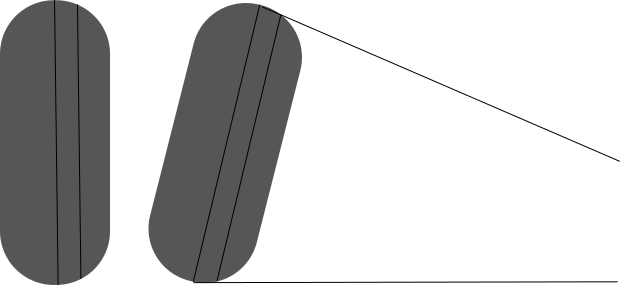
Leaning is not like in a car. The diameter of your tyre is largest
measured around the centre of the tread and gets smaller as you go
off-centre - so if you tilt the tyre then you're rolling on a section
of a cone, not a cylinder. That will naturally go round in
circles. Here's the thing, though: the radius of the turn depends only
on geometry. The shape of the tyre and the angle of lean say how sharp
the turn is going to be; the speed you're going at has (approximately)
no bearing on that.
So we're rolling a cone and it's turning. Per logic and Newton's first
law of motion, we know that to be turning it must have a force acting
on it, otherwise it would be going in a straight line. Wikipedia says
that a centripetal force has an acceleration of v squared/radius.
So there's a sideways force pushing leftward on the bottom of the
wheel, and this is going to tend to rotate the bike rightward. But,
the motorbike is already leant over to the left, so there's a
competing force from gravity which is going to try to rotate it
leftwards. Which one wins?
(This is the bit I haven't figured out: if we're looking at rotation
then we should be comparing moments not just forces, but about what
point do we measure the moment? The "hinge" is at the ground, but that
means the centripetal force would have zero moment; the other obvious
point would be the CoG. but that means the gravitational force (which
acts at CoG) has zero moment. Anywhere else we can pick seems kind of
arbitrary. Anyway, we can handwave the next part ...)
The gravitational force is greater when you're leaning further, and
the camber force is greater when you're leaning further (sharper turn)
or going faster. We assume you don't go so fast that the tyre loses
grip. So there should be some speed for a given turning radius where
the two balance. If you want to go around the corner at some other
speed, either you can change the sideways force by adding/removing
slip (turning the bars) or you can change the turning effect from
gravity by shifting your bodyweight to move the overall centre of
gravity nearer or further from vertical.
Thus: WSBK riders get their knees and their elbows down, but
Motogymkhana riders shove their Harleys sideways and stay upright. And
Fortnine is a clickbait merchant. Ryan YOU'RE DOING IT WRONG, for
any value of "it" equal to "explaining things".
It does feel kind of magical in an "anthropic principle" way that the
sideways force we need to go around a corner can be provided by
leaning the bike onto the rounded part of the tyre - and that changing
the bike's CoG by leaning it is also providing the balancing force
that stops the cornering from throwing us off to the outside. God is
~~an astronaut~~ ~~a DJ~~ ~~a cyclist~~.
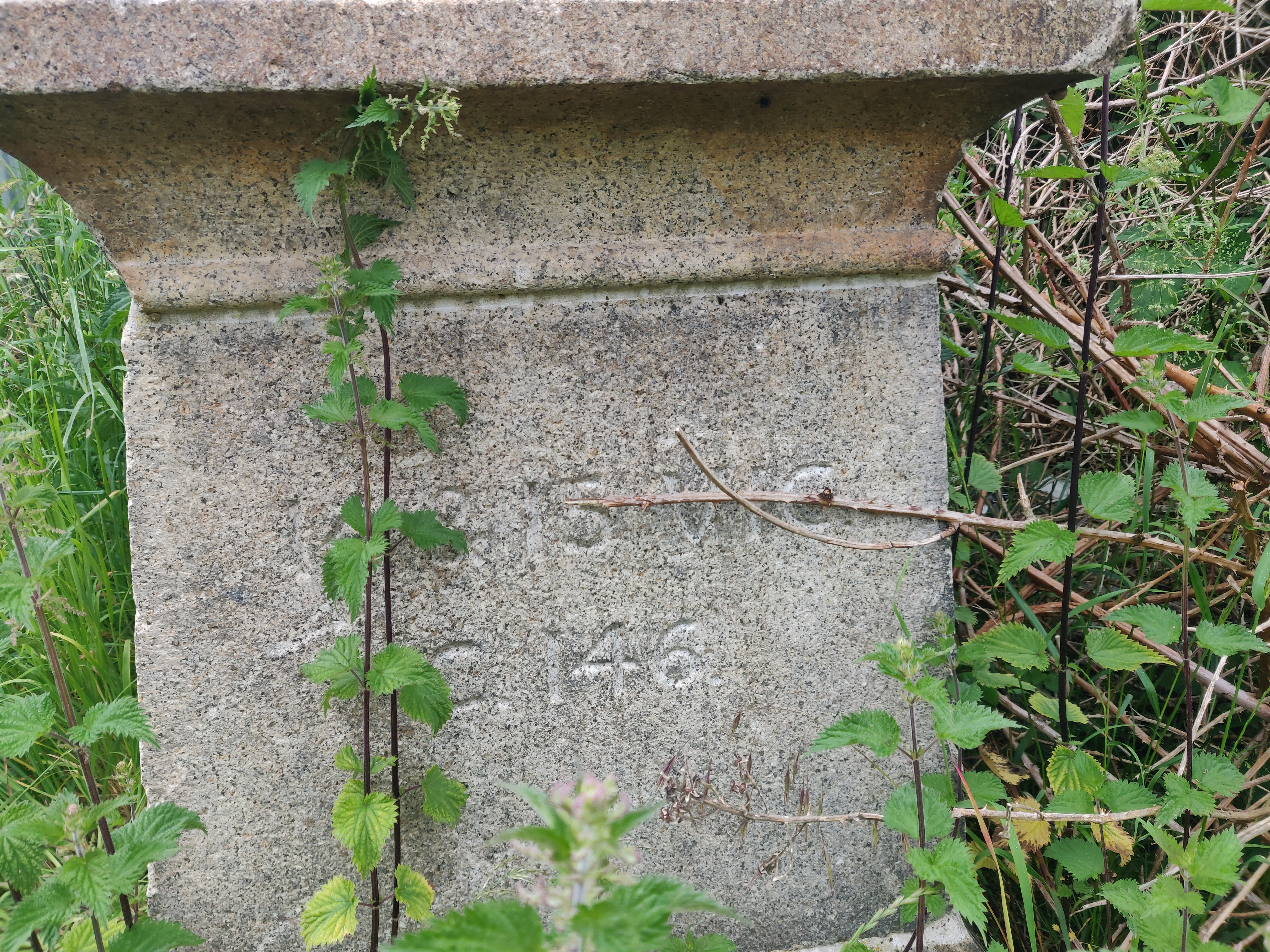
In an early example of the City of London's approach to democratic principle, they erected a series of pillars of various kinds at a 20 mile radius from London to mark the boundaries at which coal brought into London would be taxed. The tax was spent on rebuilding bits of central London (mostly churches) after the Great Fire. The practice ceased in 1890.
This particular obelisk I went to visit is in Wormley, just south of Broxbourne. It took a bit of finding, too, mostly because I saw something that I thought was it on OSM but that turned out to be a completely different coal tax marker. It is entirely possible that I also found (or at least, looked past) that marker and didn't register it because I was expecting to see something taller than I am.
The ride there was speed-limited, first to 20/30-in-places by speed limits in Waltham Forest, and then to around 40 by the van in front of me and the solid white "no overtaking" lines in the middle of the road. It took ~ 40 minutes longer than I'd planned, most of that spent wandering around Wormley woods looking for the wrong thing in the right place.
(My other clue was http://www.coaldutyposts.org.uk/today/list.html which says "E side of railway, N side of Slipe Lane at level crossing". This is all true except for the bit about the level crossing: there is no level crossing there.)
I suppose the lesson is that if I want to do motorcycle treasure hunts for random listed monuments I should expect to spend time hunting, not juist ride there and back and tick off another box,
The ride back was straight down the A10, not a lot to say there.
Anyway, D is - unless I have a better idea by the time of my next ride - for Duck Pond, which should be a much more straightforward endeavour.
 Result, indeed. My fuel-injected CBR600F (2001 and later years) meets the ULEZ standard for Euro 3 NOx emissions despite not being officially a Euro 3 vehicle, but you have to do some paperwork to get it registered as such.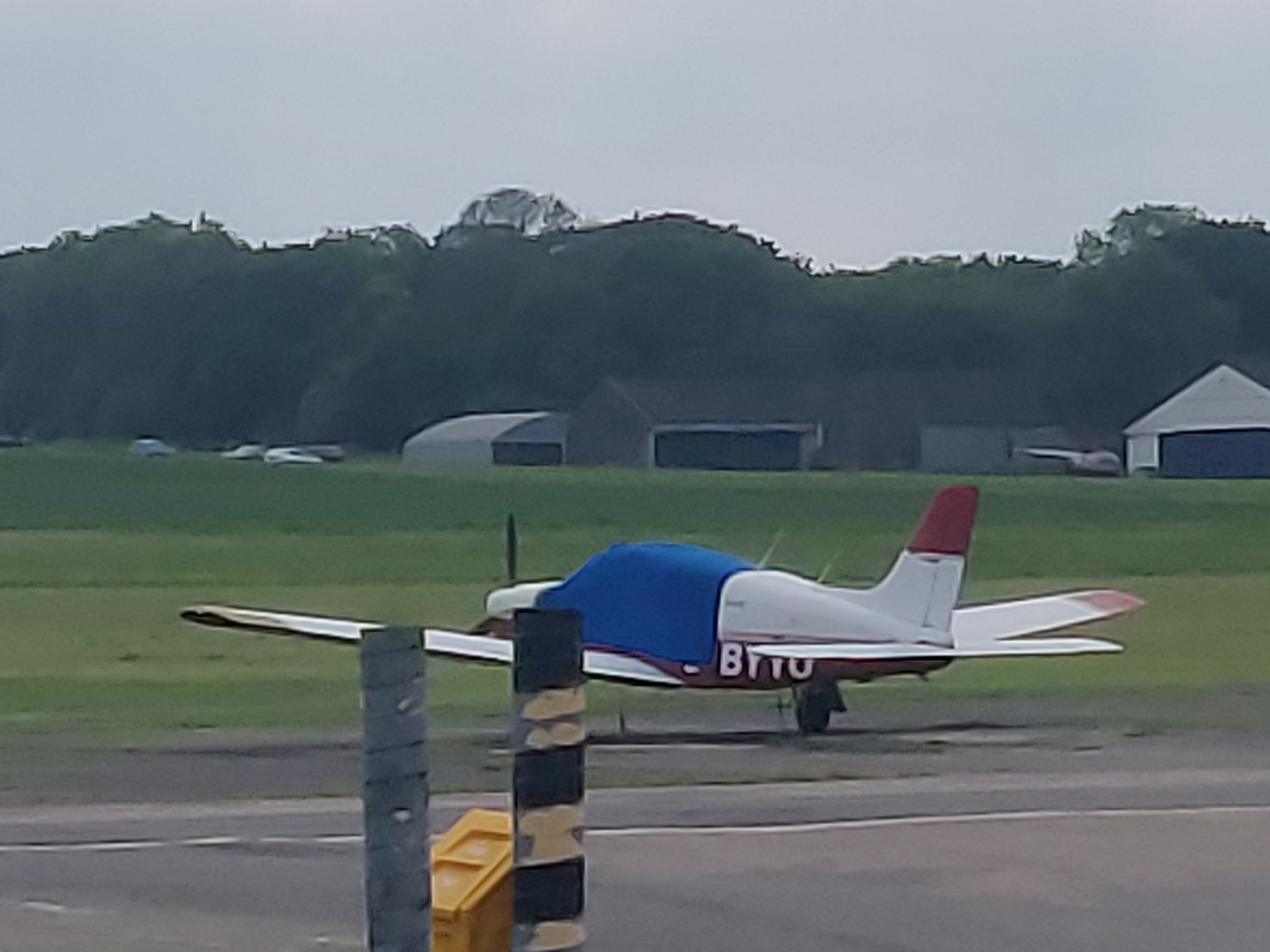
 A is for Aeroplane. The plan for this ride was to go to Stapleford Airfield and then on to Finchingfield. The ride as performed went to the airfield (as you can see) and then roughly northwards until the petrol light came on, then back the way we came then ... then I confused myself with the gps due to setting it for Abridge when I thought I'd set it for home. Went to Abridge twice, took in Chigwell (although no part of it that I recognized), then I saw a sign for Buckhurst Hill and it was more or less plain sailing after that. Phone battery died at some point between Buckhurst hill and home, so probably a good job I didn't need it by then.
 Thus: WSBK riders get their knees and their elbows down, but
Motogymkhana riders shove their Harleys sideways and stay upright. And
Fortnine is a clickbait merchant. Ryan YOU'RE DOING IT WRONG, for
any value of "it" equal to "explaining things".
Thus: WSBK riders get their knees and their elbows down, but
Motogymkhana riders shove their Harleys sideways and stay upright. And
Fortnine is a clickbait merchant. Ryan YOU'RE DOING IT WRONG, for
any value of "it" equal to "explaining things".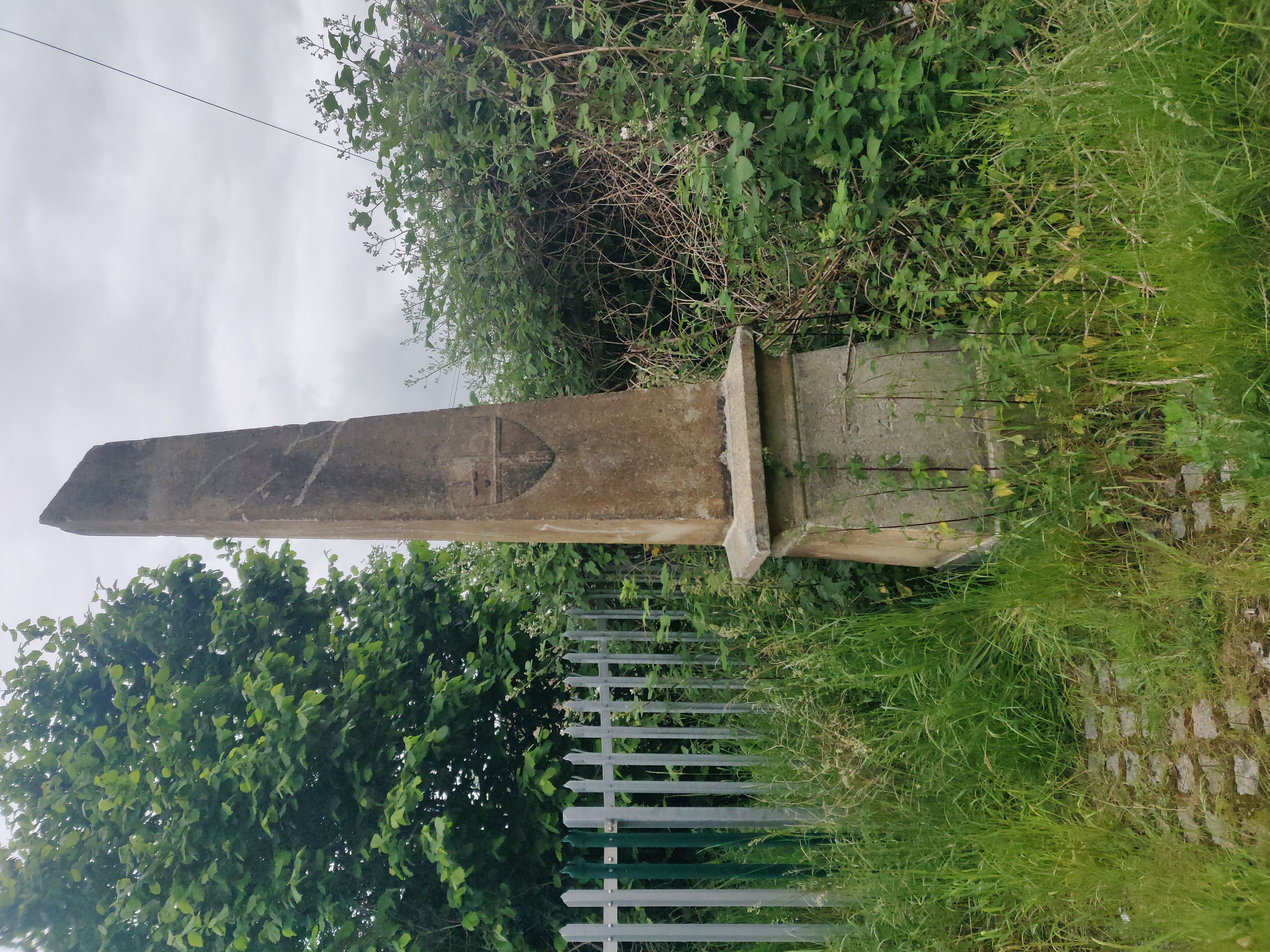 C is for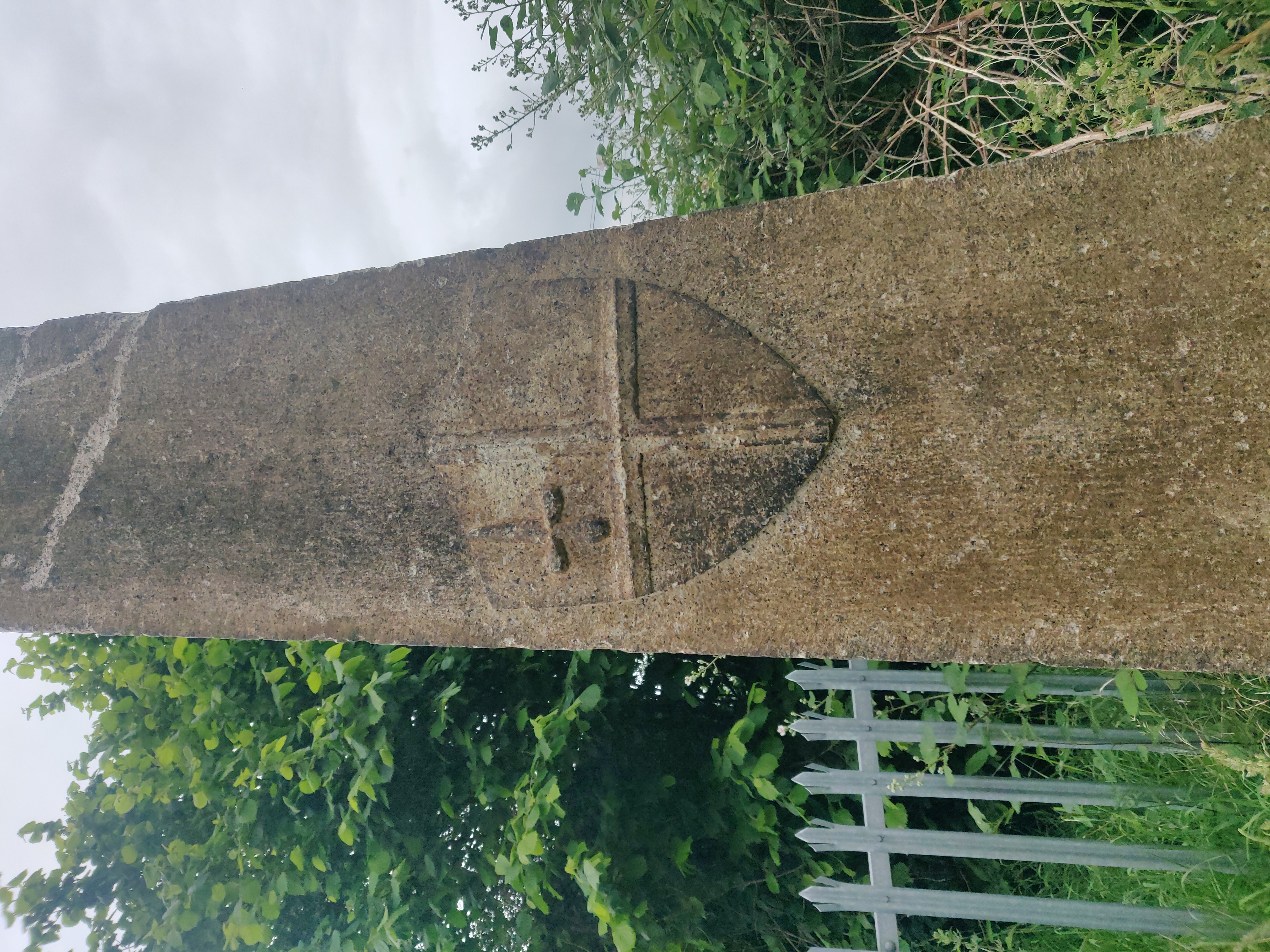
 Close-ups